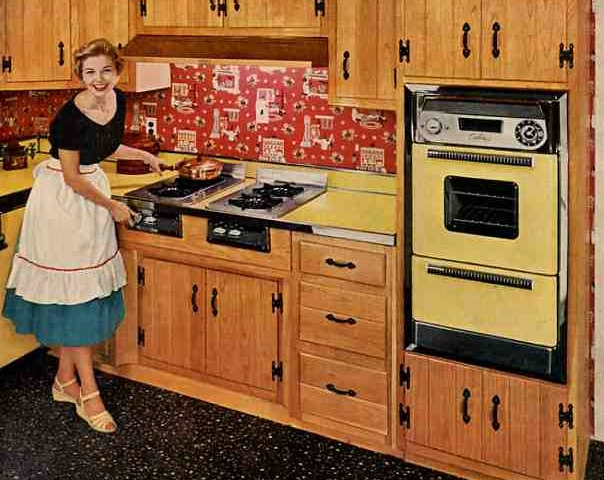
Circa 1954, Betty is in the kitchen, apron tied just right. Pearls in place. She’s the queen of her domain turning out pineapple upside down cakes while her hubs brings home the bacon (for her to cook). In most cultures throughout history, the heart of the home has been a woman’s domain. Even today though roles have shifted and functions of the kitchen have changed, it’s the woman who usually makes the decisions when it comes to the kitchen. I say USUALLY because even 10 or 15 years ago the man of the house only had a voice when it came to his office or his bar, now he is collaborating on the design of the kitchen. It was going to happen sooner or later. According to this article by The Wall Street Journal, the men are catching up and we're letting them. I wonder why it is that the upper echelons of “chefdom” belong to men but the foot soldiers of meal preparation are the women churning out meal after meal in middle America and beyond? Perhaps it's time to sit back and let the boys pamper us. Truth be told I have always aligned myself with men who know their way around the kitchen.

Now that I've got your attention, over the next few posts we will be examining the elusive phenomenon known as "men in the kitchen". We will look at a man navigating the challenges of a tiny city kitchen, the suburban family guy in the kitchen, the Gen Y bachelor and even and up and coming professional chef ! Good? Yes I knew you were in the mood for something completely different. Oh and by the way if you like the photo above it's available as wall paper here and is courtesy of wallsave.com. Next Up: How a man cooks in the city that never sleeps...


 This piece of installation art was created in Jackie's own kitchen. She is making a statement about being overwhelmed, a woman overwhelmed in her kitchen. I get that. However there is more. To understand this piece is to know that it is also about something called Celiac disease. Celiac disease is a condition that damages the lining of the small intestine and prevents it from absorbing parts of food that are important for staying healthy. The damage is due to a reaction to eating gluten, which is found in wheat, barley, rye, and possibly oats. The installation was created using domestic items such as bed sheets, buttons and thread as well as packaging from gluten free products and rice. The latter two items are a reference to Celiac.